
September 4, 2026
Rationing AI Access Has Become a Retention Decision
AI usage limits may control compute spending, but they also shape whether employees believe their employer is helping them keep pace.
Read Article


Guy Giguère, creator of the RVEAL psychometric framework and cofounder of RVEAL, has four decades of coaching across North America, Europe, and Africa, 100+ talks on labor-market evolution, and training in career and educational psychology. Guy is renowned for his corporate and personal career coaching, advising on both sides of the hiring table on how to build thriving organizations, teams, and careers.
Guy loves to travel, experiencing new cultures and outlooks on life.
AI usage limits may control compute spending, but they also shape whether employees believe their employer is helping them keep pace.

Eliminating junior roles may reduce today's costs while eroding the experience from which future managers and experts are built.

When people defer to a confident system even when their own answer is right, AI can weaken the very judgment needed to supervise it.

Most recent job changers crossed occupational categories, making transferable skills more useful than a perfectly matching title.

Transformation depends on whether people can face a difficult reality, see a credible direction, and experience evidence of progress.

Candidates increasingly encounter an AI-generated account of a workplace before they visit its careers site or speak to a recruiter.

Patient demand, workforce conditions, and market movement need to be read together before staffing pressure becomes an open role.

The strongest teams make room for dissent while refusing to excuse destructive behavior as honesty or high performance.

Automation on both sides of hiring can create an arms race that increases volume while making genuine fit harder to see.

Naming the distinctly human value in a role can guide career development and reveal where AI should remain a collaborator.

A familiar title can reveal the work more clearly than internal language and make a hidden talent pool visible.

A shrinking skilled workforce can coexist with long job searches when available people and available work no longer line up.

Delegation and communication boundaries protect the creative and strategic work that cannot be handed to someone else.

An unpaid opportunity may look open to everyone while remaining inaccessible to people who cannot subsidize their own entry.

Biographies, observation, and deliberate reflection can provide a practical form of guidance when formal mentorship is unavailable.

A twilight factory uses AI for scale while preserving human roles for variance, expertise, accountability, and final judgment.

Organizations will get limited value from AI if they automate isolated tasks without redesigning responsibilities, decisions, and handoffs around them.

Automating junior tasks can improve short-term efficiency while weakening the pathway through which people learn enough to become senior.

Use this career values assessment to identify your work priorities, compare free tools, and turn the results into better job decisions.

Caregiving pressures push experienced employees out of jobs, making flexibility and practical benefits central to retention and recruitment.

AI can make information easier to access, but people still need enough organizational and human context to judge what the output means.

A degree-free job posting changes very little if the rest of the hiring process still rewards educational pedigree over demonstrated ability.

Employee confidence can remain weak during solid corporate performance when people lack clarity about culture, growth, and what leaders will do next.

Surveys and listening sessions raise an expectation of response; silence afterward can leave employees less trusting than before they were asked.

Candidates can compare career-site promises with employee accounts in seconds, so employer branding now begins inside the organization.

When employers advertise roles they are not actively filling, candidates learn to doubt legitimate postings and disengage from the hiring market.

A manager who hits short-term targets while driving capable people away is transferring costs to the rest of the organization.

Intergenerational teams can combine comfort with emerging tools and the contextual judgment needed to use them well.

Data presented at Indeed FutureWorks 2026 shows job postings requiring more skills as technical requirements spread into non-technical roles.

Indeed FutureWorks 2026 product examples showed dramatic time savings, but speed matters most when recruiters reinvest it in better human decisions.

Before choosing an AI tool, leaders should identify the human decision it will influence, the possible harm, and who remains accountable.

Twin-track career paths let technical experts gain status and influence without moving into people management that may not fit their strengths.

Organizations need safeguards around uncertainty, but treating trust as the absence of risk makes adaptation and honest collaboration harder.

Psychometric assessments can help you find clarity, but can't choose your direction for you.

Rutger Bregman argues that following your passion and chasing prestige both lead to regrettable careers. His answer is moral ambition.

How Energy Tax distinguishes between effort and alignment, and why burnout is often unrelated to hours worked.
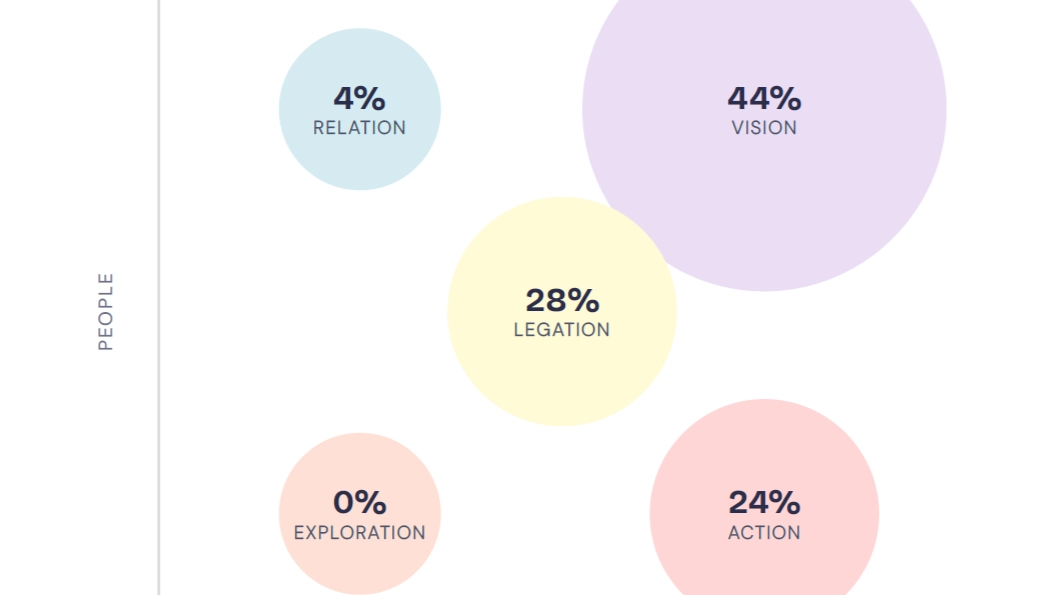
A breakdown of the five foundational dimensions - Relation, Vision, Exploration, Action, and Legation - within the RVEAL framework.

A breakdown of the RVEAL Report, including the Motivational Architecture, Energy Scales, and determining Coherence.
Take the assessment and get 3 free coaching sessions with Leo.