
The Best AI Team May Pair Technical Fluency With Institutional Memory
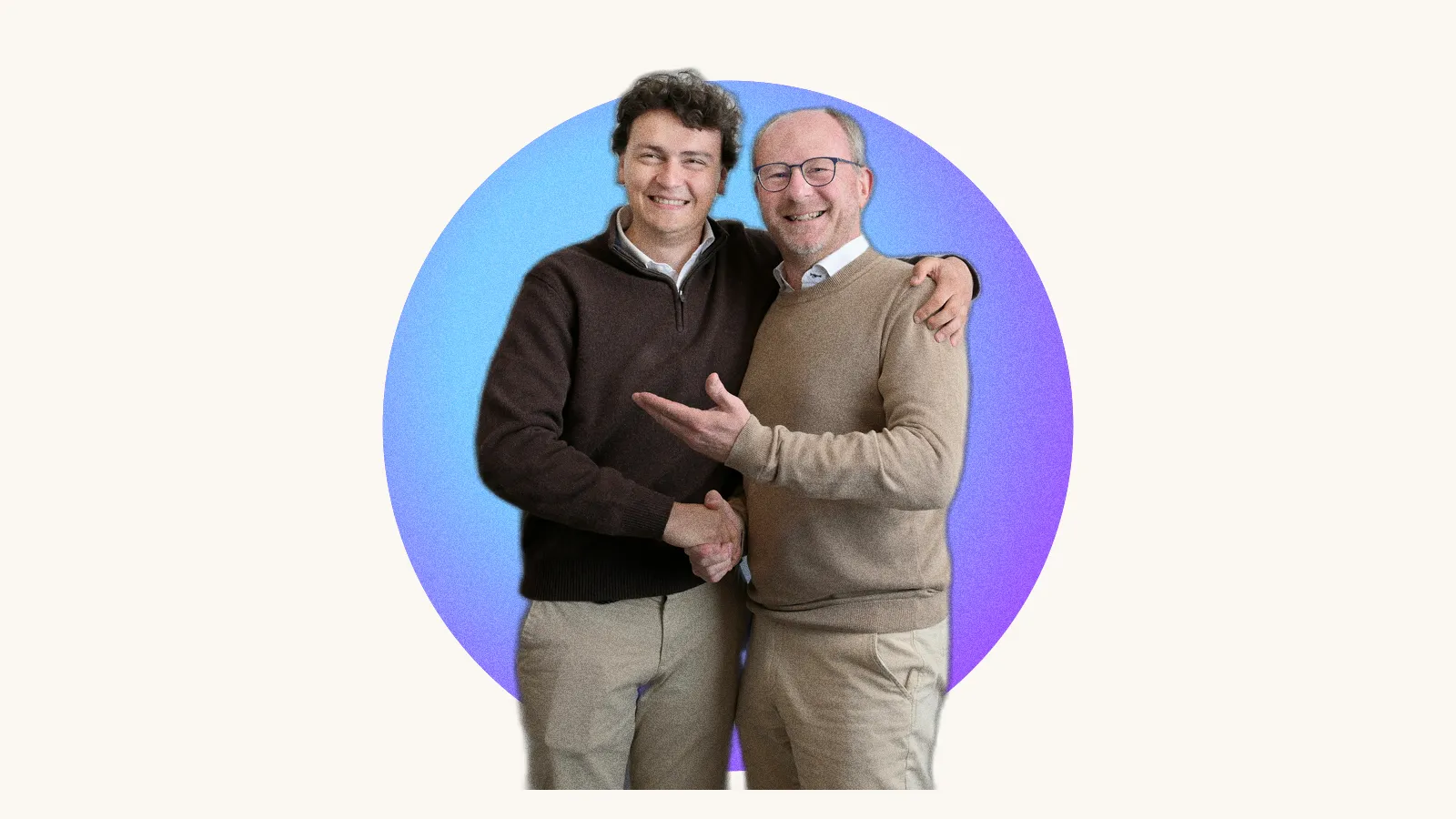
Organizations often treat AI adoption as a race between generations. Younger workers are assumed to be naturally fluent with new tools. Older workers are described as experienced but resistant. Both stereotypes waste talent.
A more useful design combines complementary forms of knowledge. Someone who experiments easily with unfamiliar technology can help a team discover what is possible. Someone who understands the organization’s history, customers, and exceptions can recognize where a promising output will fail. Working together, they can learn faster and make fewer expensive mistakes.
Joseph Fuller proposed this kind of intergenerational pairing during The Hiring Shift at Indeed FutureWorks 2026. His point was not that age guarantees a particular ability. It was that organizations need to connect technical aptitude with contextual intelligence rather than allowing the two to sit in separate parts of the workforce.
The idea works when leaders design for reciprocal contribution, not one-way tutoring.
Different experience creates different blind spots
A person who has used generative tools from the beginning of their career may be quick to test new workflows, compare systems, and discard old methods. They may also have limited exposure to the downstream effects of a decision.
A long-tenured employee may know why a process contains an awkward exception, which customer promise cannot be broken, and which apparently simple change failed five years ago. They may also overestimate the permanence of constraints that technology has made easier to remove.
Neither perspective is sufficient. Technical confidence without context can produce elegant mistakes. Context without experimentation can protect inefficient habits.
The value lies in the disagreement. One person asks why the work must remain this way. The other explains which consequences the new approach has not considered. A good team tests both claims.
Pairing needs a real problem and shared status
Mentoring programs often fail because they are abstract. People are matched, encouraged to meet, and left to exchange general advice. The relationship competes with daily work and gradually disappears.
An intergenerational AI pairing is more useful when both people own a concrete outcome. They might redesign one recruiting workflow, test an AI-supported customer process, or examine how a recurring analysis could change. The work creates a reason to exchange knowledge and a visible result to evaluate.
Status also matters. If the younger employee is treated as free technical support, their contribution is diminished. If the older employee is positioned as the unquestioned authority, experimentation becomes unsafe. Each person needs a domain in which their knowledge is genuinely consequential and permission to challenge the other.
Knowledge should leave the pair
The goal is not to create two-person islands of expertise. As the pair learns, it should make the learning available to the wider team.
That can include a record of tested use cases, known failure modes, decision guidelines, customer considerations, and examples of when human review changed an output. The most valuable artifact is often the reasoning, not a fixed list of prompts.
This transfer also reduces succession risk. Institutional memory becomes less dependent on one veteran, while technical practice becomes less dependent on one enthusiast. Both forms of knowledge become part of how the team works.
So what should leaders do?
Choose pairings by capability and perspective rather than age alone. Ask who experiments comfortably, who knows the system deeply, who has customer credibility, and who is skilled at explaining their reasoning. A 28-year-old can carry deep context; a 60-year-old can be the most technically adventurous person on the team.
Give the pair a bounded problem with a meaningful result, access to the people affected, and time to work. Define what cannot be compromised, then allow them to question the rest.
Measure learning as well as efficiency. Did the team identify a new use case? Did it prevent a poor decision? Can other employees now apply the method? Has knowledge that once lived in one person’s head become easier to transfer?
Managers should also watch the interpersonal conditions. Curiosity, humility, and the ability to disagree without losing respect determine whether complementary knowledge combines or collides. Team fit is not sameness. It is the capacity to use difference productively.
For workers, the opportunity is reciprocal. People with technical fluency can seek out the colleagues who understand consequences. People with deep context can learn the tools that make their judgment more scalable. Neither needs to become the other.
The strongest AI capability may not sit in one exceptional employee. It may emerge between two people who know different things and are given a reason to build together.

Guy Giguère, creator of the RVEAL framework and cofounder of RVEAL, has four decades of coaching across North America, Europe, and Africa, 100+ talks on labor-market evolution,…
Ready to find career alignment?
Take the assessment and get 3 free coaching sessions with Leo.