
Risk Management Cannot Build the Trust That Change Requires
Organizations often try to create trust by making uncertainty disappear. They add approvals, controls, forecasts, policies, and reporting until people can be assured that nothing unexpected will happen.
Those practices can manage risk. They cannot create the kind of trust a team needs when the future is genuinely unknown.
Trust becomes relevant precisely where prediction ends. It allows someone to depend on a colleague, leader, or organization without knowing the exact outcome in advance. During restructuring, AI adoption, strategic change, or a difficult hiring decision, the promise that everything will be safe is rarely credible. People need a basis for moving forward even though the result cannot be guaranteed.
Trust expert Rachel Botsman described that distinction at Indeed FutureWorks 2026. Risk asks, “What could go wrong?” and builds prevention around the answer. Trust asks, “What is possible?” She defined trust as a “confident relationship with the unknown.”
The difference changes how leaders should communicate, delegate, and design work during uncertainty.
Safety and trust solve different problems
Risk management reduces the likelihood or impact of a bad outcome. It is essential in finance, safety, privacy, compliance, and any decision with serious consequences. Clear controls can also make trust easier by showing that an organization takes its responsibilities seriously.
But control has a limit. If every action must be predicted and approved, people learn that following the process matters more than responding intelligently to reality. A team may become safer on paper and less capable in practice.
Trust addresses what remains after reasonable safeguards are in place. Can a manager admit that a plan may change? Can an employee raise a problem before they have a complete solution? Can colleagues make decisions without waiting for permission at every turn? Can a candidate believe an employer will communicate honestly even if the answer is no?
These are relational questions. A policy can support them, but it cannot answer them alone.
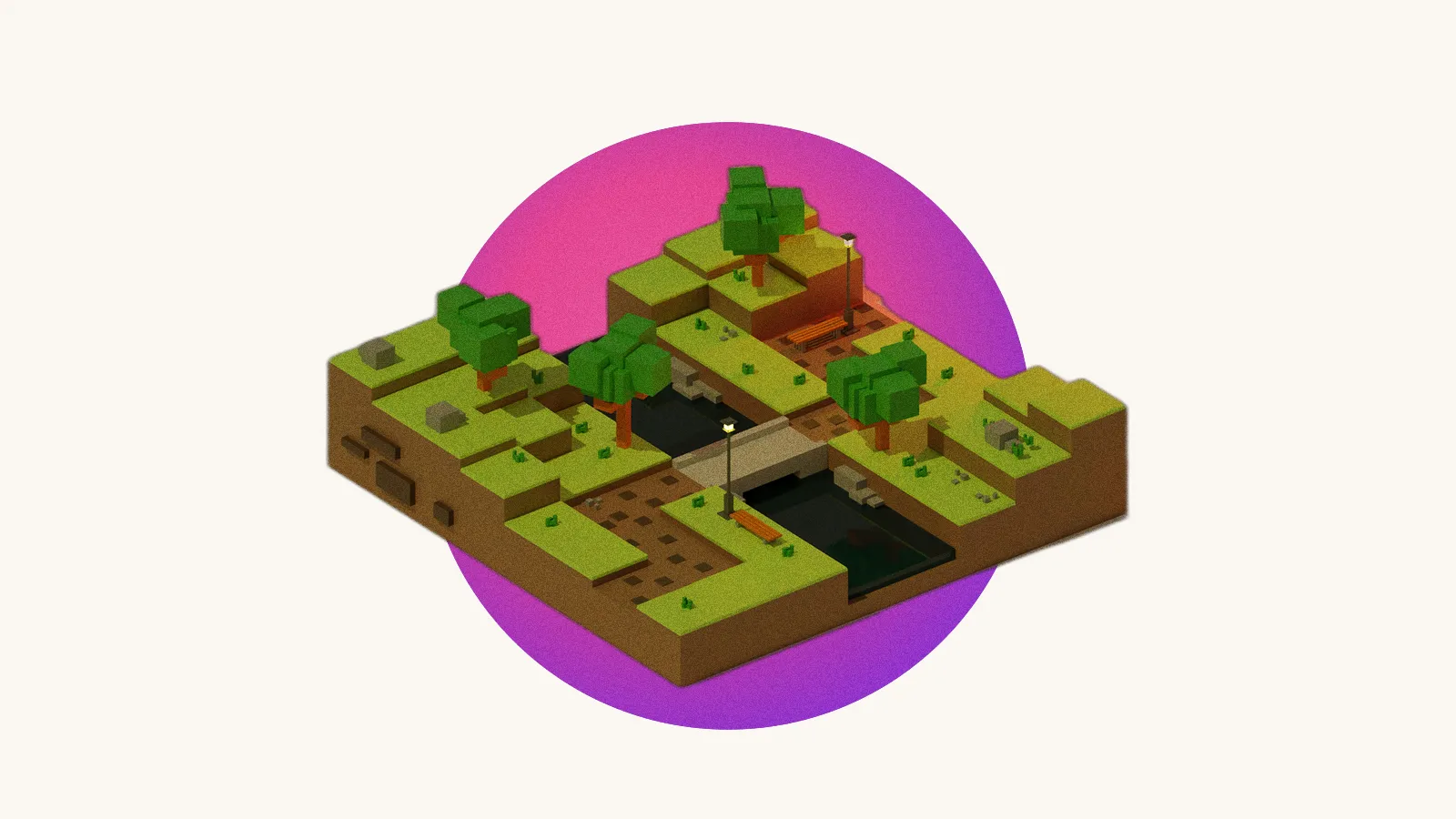
Tetris organizations struggle in Minecraft conditions
Botsman used a useful contrast between Tetris and Minecraft. Tetris has fixed pieces, a bounded space, and one correct orientation at a time. Success comes from control, speed, and fitting each object into a predetermined structure.
Minecraft is open-ended. People build, explore, combine resources, and adapt as the environment changes. The destination can emerge through participation rather than arriving as a finished plan.
Many corporate systems were built for Tetris. Job descriptions define boxes, decisions move through linear approval chains, and leaders are rewarded for appearing certain. Modern work increasingly behaves like Minecraft: teams are distributed, technology changes quickly, and the knowledge needed for a decision is spread across the organization.
The old controls do not become useless. They become insufficient. Adaptation depends on whether people trust one another enough to share incomplete information, challenge an assumption, and act within clear boundaries.
False certainty weakens leadership
Uncertainty makes leaders feel pressure to sound confident. They may announce a transformation as fully planned, describe a new technology as inevitable, or avoid discussing consequences they cannot yet predict.
That performance of certainty usually fails because employees can see the unanswered questions. When the plan later changes, the correction looks like concealment or incompetence. Trust falls even if the original uncertainty was unavoidable.
A more credible leader separates what is known, what is undecided, and what will guide the decision. They explain who is accountable, when people will hear more, and what employees can influence. This does not remove anxiety. It gives people a reliable relationship with the process.
The same principle applies inside teams. A manager who invites dissent and responds without punishment makes uncertainty discussable. A manager who expects confidence at all times drives risk underground.
So what does leading through trust require?
Start by using risk controls for the risks they can actually contain. Define non-negotiable boundaries, escalation points, and decisions that require oversight. Then give people meaningful room to act inside those boundaries.
Make uncertainty explicit. Leaders can say, “Here is what we know, here is what we are testing, and here is what would cause us to change course.” That statement is more useful than reassurance no one believes.
Build evidence of reliability in ordinary moments. Follow through on commitments. Explain a changed decision. Share credit. Respond constructively when someone brings bad news. Trust in a major transition draws on a history formed long before the announcement.
Teams can also ask which operating model a situation needs. Routine, regulated work may benefit from a Tetris-like process. Novel work may need a Minecraft-like environment with shared goals, flexible roles, and frequent learning. Trouble begins when one model is applied to everything.
Trust is not permission to ignore consequences. It is the capacity to move responsibly when consequences cannot be known in full. Organizations need both disciplines: the rigor to manage foreseeable harm and the relationships to navigate everything their controls cannot predict.
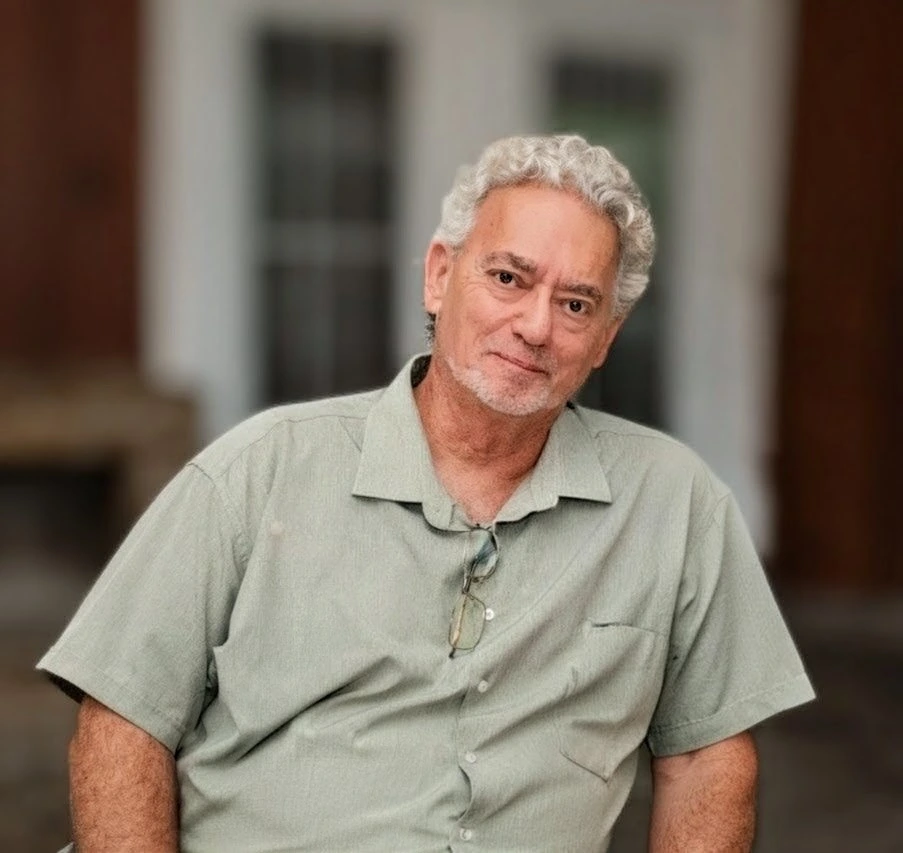
Guy Giguère, creator of the RVEAL framework and cofounder of RVEAL, has four decades of coaching across North America, Europe, and Africa, 100+ talks on labor-market evolution,…
Ready to find career alignment?
Take the assessment and get 3 free coaching sessions with Leo.